Pontuação de impacto
Footprint Score nos dois contextos mais representativos.
0 análises · última análise há 22 horas
Score Homepage
Impacto medido na página inicial pública
Score Admin
Impacto medido na administração WordPress
Sobre
Quer substituir o antigo link ← Posts anteriores | Posts recentes → com alguns links de página?
This plugin provides the wp_pagenavi() template tag which generates fancy pagination links.
Much of the 2.x line was the work of scribu, whose write-ups on using it with secondary queries are still the ones the FAQ below points at. The plugin icon is by SimpleIcon from Flaticon.
Ler mais Mostrar menos
Eu passo a maior parte do meu tempo livre na criação, atualização, manutenção e suporte desses plugins, se você realmente ama meus plugins e pode me enviar alguns dólares, eu realmente aprecio isso. Mas do contrário, sinta-se livre para usá-los sem quaisquer obrigações.
In your theme, you need to find calls to next_posts_link() and previous_posts_link() and replace them.
In the Twentyten theme, it looks like this:
<div class="nav-previous"><?php next_posts_link( __( '<span class="meta-nav">←</span> Older posts', 'twentyten' ) ); ?></div>
<div class="nav-next"><?php previous_posts_link( __( 'Newer posts <span class="meta-nav">→</span>', 'twentyten' ) ); ?></div>
You would replace those two lines with this:
<?php wp_pagenavi(); ?>
For multipart pages, you would look for code like this:
<?php wp_link_pages( ... ); ?>
e substitua com:
<?php wp_pagenavi( array( 'type' => 'multipart' ) ); ?>
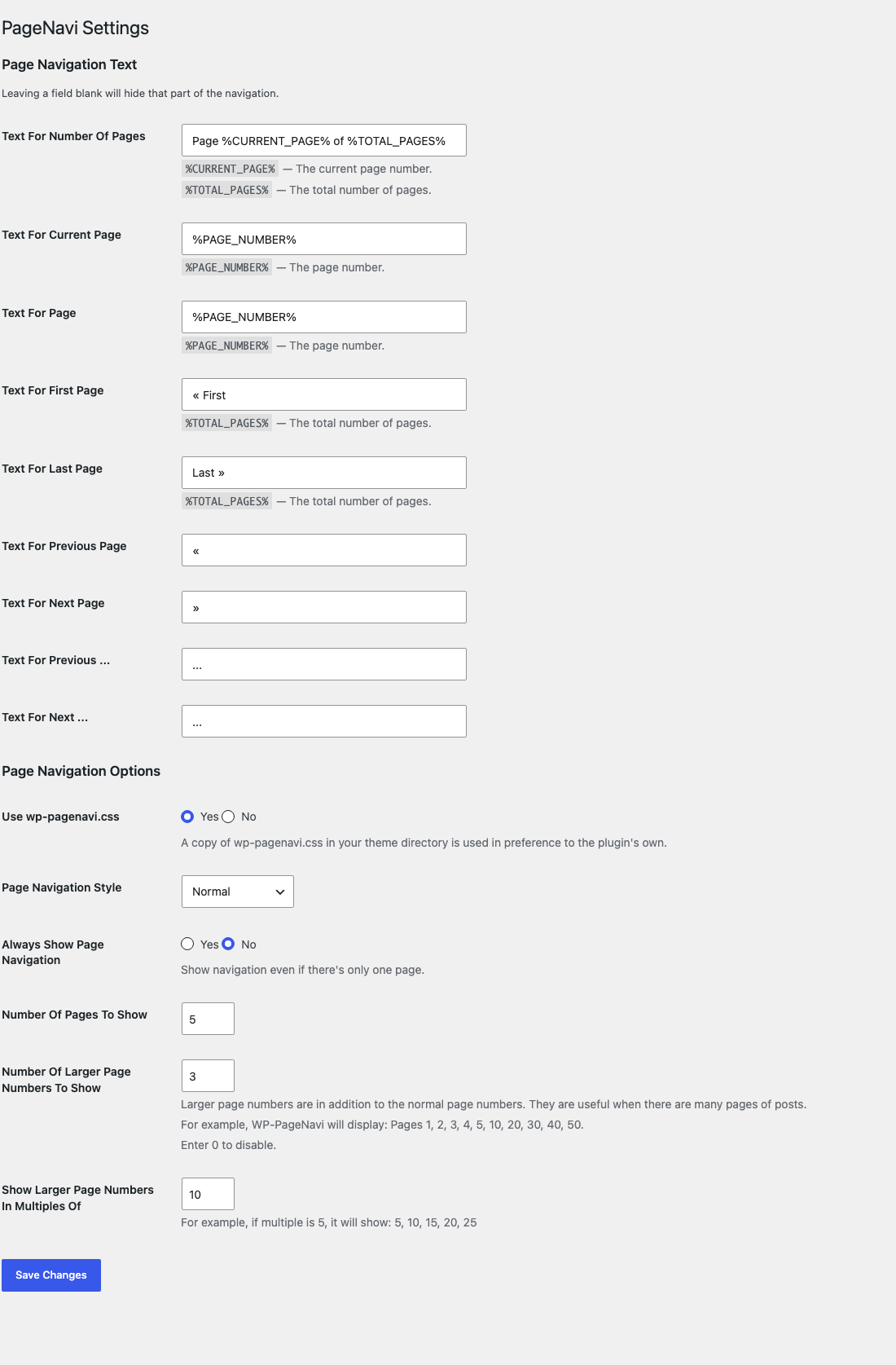
Go to WP-Admin -> Settings -> PageNavi for configuration.
If you need to configure the CSS style of WP-PageNavi, you can copy the css/wp-pagenavi.css file from the plugin directory into your theme’s directory as wp-pagenavi.css and make your modifications there. This way, you won’t lose your changes when you update the plugin.
The stylesheet sets no font and no text colour, so it inherits both from your theme, and its two border colours are CSS custom properties. A small change needs no copy of the file at all:
.wp-pagenavi {
    --wp-pagenavi-border-color: #d0d0d0;
    --wp-pagenavi-border-color-current: rebeccapurple;
}
Alternatively, you can set “Use wp-pagenavi.css” to No on the settings page and add the styles to your theme’s style.css file directly.
There are filters that can be used to change the default class names that are assigned to page navigation elements.
Descrição publicada por Lester Chan em WordPress.org, sob a licença GPLv2 or later.
Capturas de ecrã
Capturas publicadas por Lester Chan em WordPress.org, sob a licença GPLv2 or later.